
Carissimi amici!
Allow me to introduce myself and share a bit about my role before we embark on this exciting journey together. I’m Giorgio, Italology’s Travel Advisor for Italy and, perhaps most importantly, Giulia’s dad. I live in Italy and am thrilled to support Giulia in her Italology project by sharing my knowledge with all of you.
Together, we’ll embark on a journey to uncover Italy’s hidden gems, immersing ourselves in its captivating history, vibrant culture, and cherished traditions. Through our travel posts, we’ll provide you with insights into Italy’s lesser-known treasures, along with practical highlights for travelers exploring these enchanting areas. At the end of each post, you’ll find a link to the original article in Italian, written by me, Giorgio. While the Italian article has been adapted and translated for non-Italian speakers, we’re delighted to share the original version for those who prefer to read in Italian.

In your company, I would like to begin this journey across Italy. Perhaps the places we will visit are less well-known than cities such as Rome, Venice, Milan, Naples, Florence, and others, but they are places where you can feel just as much, if not more, of the tradition, culture, and history that have always made Italy famous.
Some of the places we will visit are “Borghi,” meaning small villages that I personally want to highlight to help you discover the true “humus” of Italy. By the way, sometimes in my writing, I will use terms derived from Latin, and with a little imagination, you will be able to grasp their meaning.
Let’s keep in mind the shape of Italy: it is essentially a boot with its heel stretching from north to south for 1,200 kilometers. The north lies in Europe, bordered by the Alps, while the south extends into the Mediterranean Sea. Central Italy, from where we will start our tour, is the area that blends the warmth and sun of the Mediterranean with the pragmatism of Europe.
This is the difference in the way of thinking, speaking, and living between northern and southern Italy.
We’ll begin this adventure in Le Marche, Italology’s hometown and one of Italy’s most underrated treasures. Nestled between the Adriatic Sea and the rolling hills of the Apennines, Le Marche offers a stunning tapestry of landscapes: medieval hilltop towns, golden beaches, and vibrant countryside. It’s a region where you can sip local Verdicchio wine in a family-run vineyard, hike through breathtaking nature reserves, or explore ancient ruins with barely another tourist in sight.
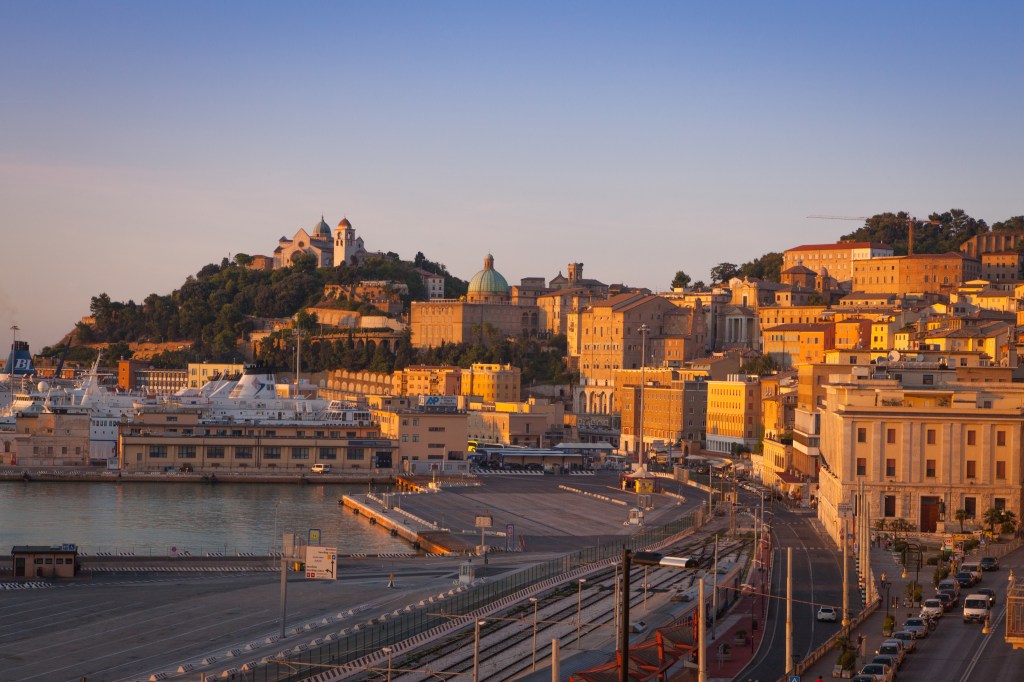
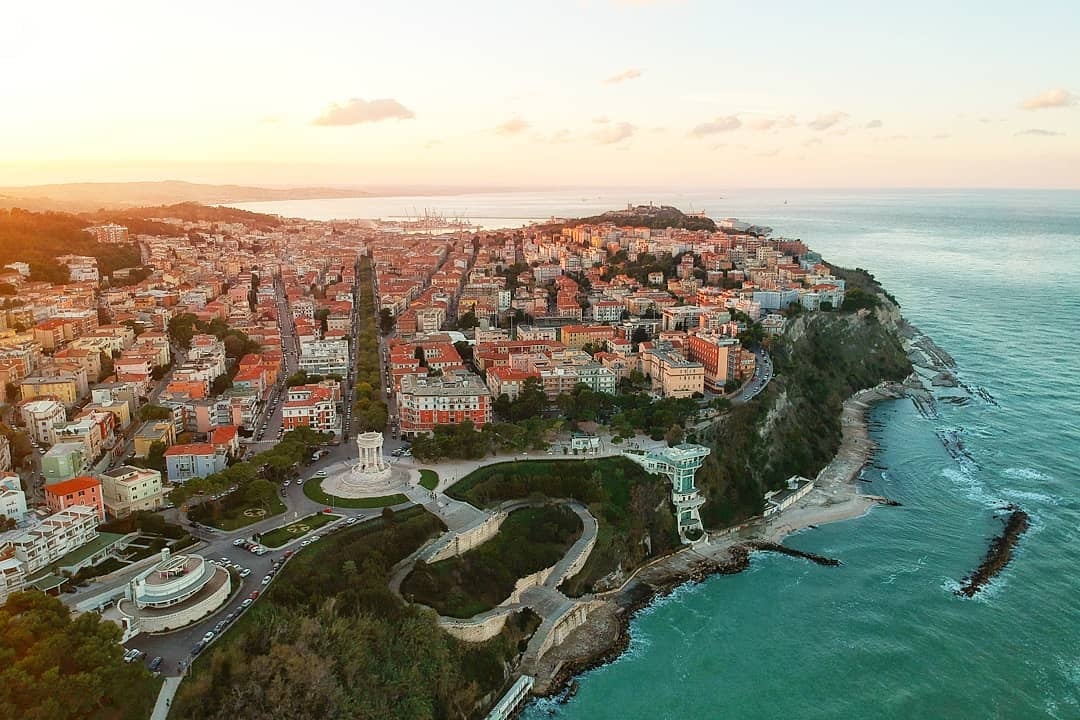
Ancona is the capital of the region, home to just over 100,000 residents. The city is perched on a rocky spur that dives into the Adriatic Sea to the east and gently rests on the green, rolling hills of the Marche region to the west.
Ancona and its port are remembered as centers of trade with the Near East. It was founded by the Greek people of the Dorians, who named it “Ankon” (“Elbow”) for its shape jutting out into the sea. It was a Roman colony, later dominated by Venice, then declared a Maritime Republic, annexed to the Papal States, and finally, in 1861, it became part of the Kingdom of Italy.

The cathedral, known to locals as “San Ciriaco,” is perched on the highest point, overlooking the sea, and embracing the city. “San Ciriaco Cathedral” has always existed, initially as a pagan temple, and much earlier than the year 1000, it was converted into a Christian church. It houses the image of the “Madonna del Duomo,” to whom the people of Ancona are particularly devoted. During the Sea Festival, it is paraded by all the fishing boats of Ancona.
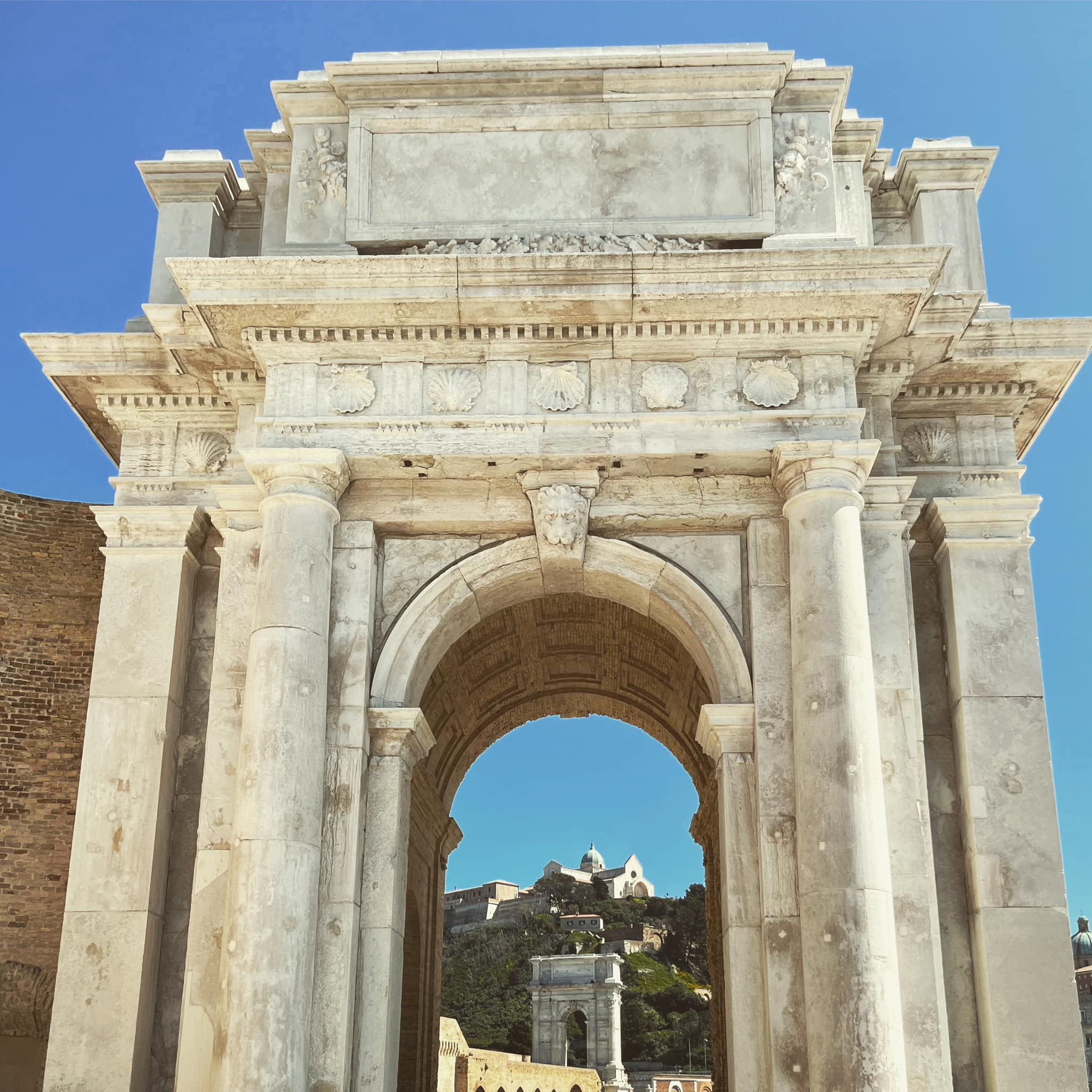
Over time, thanks to maritime trade, Ancona reached its peak, and families-built palaces and works of art, turning the old downtown Ancona, overlooking the port, into a lacework of beauty. Highlights include Vanvitelli’s “Lazzaretto,” the “Palazzo degli Anziani,” and the “Fontana delle tredici cannelle”, or to better understand “Fountain of the Thirteen Spouts.”

Ancona’s cuisine is particularly appreciated, featuring dishes such as “Brodetto all’anconetana” and stockfish. However, every dish is accompanied by “moscioli.” These are nothing more than mussels, which, thanks to their environment, are particularly flavorful. As a child, we used to fish for them and eat them raw with a bit of lemon!

The sea rules in Ancona, in the air you breathe, in the food, and during leisure time. At night, when everything is silent, from the sound of the wind and the sea, you’ll know what the weather will be like tomorrow.
I could speak endlessly about Ancona: taciturn, sly, “mercantile.” It seems almost detached from the world around it. The people of Ancona embody the true “mariner” spirit: distrustful, minding their own business, but when you ask for help, they give you “more than you need” as my friend Luca Bujò would say.
Before we journey to our next destination in the Marche region, let’s stop here and dive into some helpful details about Ancona, in case you ever want to visit the area
Ancona Highlights: What You Need to Know Cultural and Historical Attractions
Cultural and Historical Attractions
- Ancona Cathedral (Cattedrale di San Ciriaco)
- A stunning Romanesque-Gothic cathedral overlooking the city and the sea. Its location offers breathtaking views of the Adriatic.
- Arch of Trajan (Arco di Traiano)
- An ancient Roman monument in the port area, erected in honor of Emperor Trajan in 115 AD.
- Lazzaretto of Ancona (Mole Vanvitelliana)
- A pentagonal building designed by Luigi Vanvitelli in the 18th century, used historically as a quarantine station. It now hosts cultural exhibitions and events.
- National Archaeological Museum of the Marche (Museo Archeologico Nazionale delle Marche)
- Houses significant archaeological finds from the region, including prehistoric and Roman artifacts.
- The Port of Ancona
- A bustling area with a mix of ancient and modern elements, great for watching ferries and enjoying local seafood.
- Passetto Monument and Beach
- A monument to the fallen soldiers of World War I, located near a beautiful seaside promenade. You can descend to a rocky beach area with unique fishing caves.
Natural Beauty
- Mount Conero and Conero Regional Park
- A must-see for nature lovers, offering hiking trails, vineyards, and breathtaking views of the Adriatic. The park includes beaches like Mezzavalle and Portonovo.
- Portonovo Bay
- A picturesque bay with white pebble beaches, turquoise waters, and delicious seafood restaurants. It’s a perfect spot for relaxation and water sports.
- Spiaggia del Passetto
- A unique beach accessible by stairs or an elevator, featuring dramatic cliffs and rocky shores.
- Riviera del Conero
- A stretch of coastline south of Ancona with stunning beaches like Sirolo, Numana, and Marcelli, known for their clear waters and natural beauty.
Food and Wine
- Local Cuisine
- Try regional specialties like brodetto all’anconetana (fish stew), vincisgrassi (a rich baked pasta dish), and fresh seafood dishes.
- Verdicchio Wine
- Ancona is part of the Verdicchio wine-producing region. Visit local wineries to taste this crisp, white wine.
- Seafood Dining
- The port area is perfect for enjoying freshly caught fish and seafood dishes at local trattorias.
Festivals and Events
- Tipicità Festival
- A celebration of Marche’s food and wine, typically held in spring.
- Ancona Jazz Festival
- A popular event featuring international jazz artists.
- Saint Ciriaco’s Day (May 4)
- The city’s patron saint is celebrated with processions, music, and cultural events.
Nearby Destinations
- Loreto
- A short drive from Ancona, known for the Basilica della Santa Casa, a major Catholic pilgrimage site.
- Frasassi Caves (Grotte di Frasassi)
- A spectacular cave system about an hour from Ancona, featuring incredible stalactites, stalagmites, and underground lakes.
- Osimo and Offagna
- Charming hilltop towns with medieval architecture and panoramic views of the Marche countryside.
- Senigallia
- A coastal town north of Ancona, famous for its velvet sandy beaches and summer events like the Summer Jamboree Festival.
- And Many More
Practical Tips
Spring and summer are the best times to enjoy the beaches and outdoor activities. Fall is perfect for exploring cultural sites and wine tasting.
Transportation
Ancona is well-connected by train, car, and ferry. The port offers ferry services to Croatia, Greece, and Albania.
Walking Tours
The historic center is compact and perfect for exploring on foot.
Local Markets
Check out the weekly markets in Piazza d’Armi and Piazza Cavour for fresh produce and local products.
Language
While Italian is the primary language, many locals, especially in tourist areas, speak some English.
Season to Visit
Spring and summer are the best times to enjoy the beaches and outdoor activities. Fall is perfect for exploring cultural sites and wine tasting.
Link to the Original Italian Article: Please note that the English version has been adapted from the original Italian text.
Giorgio and the Italology Team 💚🤍❤️
Coming up next week: ” Le Marche – Cupramontana and Senigallia“
️Follow us on Instagram, Facebook, X (former Twitter) and LinkedIn!
 Italology: Italian language services, culinary experiences, and fencing coaching
Leave a comment